Ranking Methodology
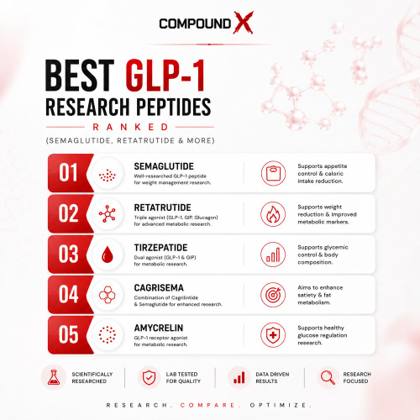
GLP-1-pathway compounds are unusual on this site because one of them — Semaglutide — is an actual FDA-approved medication, not a research chemical. That fact drives this ranking more than mechanism novelty does: regulatory status is weighted heavily, since it reflects the depth of safety and efficacy review each compound has actually received.
The Ranking
1
Semaglutide
FDA-approved (Ozempic, Wegovy, Rybelsus)
The only compound on this list with full FDA approval and a complete, publicly reviewable prescribing-information safety dossier. Mimics GLP-1 directly, slowing gastric emptying and acting on hypothalamic appetite centers.
2
Retatrutide
Investigational triple agonist (GLP-1/GIP/glucagon)
The most mechanistically novel compound on this list — simultaneously targeting three incretin-family receptors — with substantial trial interest, but it remains investigational and is not yet FDA-approved.
3
Sermorelin
Different pathway (GHRH), included for metabolic-research overlap
Not a GLP-1 compound itself, but frequently discussed alongside metabolic-research peptides for its own GH-axis role in body composition research — a different receptor system worth distinguishing from true incretin agonists.
The Takeaway
Regulatory status is the real differentiator here
Semaglutide's FDA approval means it has a genuine prescribing pathway through a doctor, with an FDA-reviewed dosing schedule and safety monitoring — a fundamentally different category from investigational or research-only compounds, regardless of how promising a mechanism like Retatrutide's triple agonism looks in trial data.
FAQ
Is Retatrutide better than Semaglutide?
Mechanistically, Retatrutide's triple-receptor approach is more novel and researchers have proposed it could combine effects that single-receptor drugs don't. But Semaglutide is FDA-approved with a complete safety review; Retatrutide is not, which is the more practically important distinction right now.
Why is Sermorelin on a GLP-1 list?
It isn't a GLP-1 compound — it works through the GHRH receptor pathway. It's included here because it's frequently discussed alongside metabolic-research peptides, and the distinction is worth making explicit rather than ignoring.
Are research-grade versions of these peptides the same as the prescription drug?
No. Research-grade material sold outside a prescription or clinical trial is not the same regulated, quality-controlled product as FDA-approved prescription semaglutide.
References
Semaglutide FDA prescribing information. Retatrutide clinical trial program, Eli Lilly. Sermorelin GHRH-analog mechanism literature.