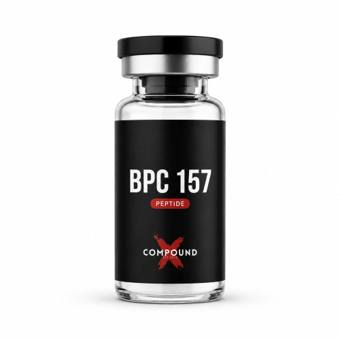
Peptides
BPC-157
BPC-157 is a peptide widely discussed in research on tissue repair and gut health. Below, we compare vendors currently stocking research-grade BPC-157 — not just a single sales page.
BPC-157 is a peptide widely discussed in research on tissue repair and gut health. Below, we compare vendors currently stocking research-grade BPC-157 — not just a single sales page.
Prices and testing claims are pulled from each vendor's product listing. Always confirm current price and COA (Certificate of Analysis) on the vendor's site before buying.
| Vendor | Price | Purity Testing | Code | |
|---|---|---|---|---|
 UK SarmsBest Value UK SarmsBest Value |
£29.99 – £49.99 | Third-party COA | Auto-applied | Buy Here → |
 Amino Club Amino Club |
From $39.99 | Third-party COA | Buy Here → | |
 Purity Peptides Purity Peptides |
$59.99 – $124.99 | Third-party COA | Buy Here → | |
 American Peptides American Peptides |
From $60.00 | Third-party COA | Buy Here → | |
 Amino Vault Amino Vault |
$62.05 – $148.75 | Third-party COA | Buy Here → | |
 MuscleChem MuscleChem |
£49.99 | In-house testing | Buy Here → | |
 SwissChems SwissChems |
$85.95 | Third-party COA | Buy Here → |
BPC-157 (Body Protection Compound-157) is a synthetic pentadecapeptide derived from a partial sequence of a protective protein naturally present in human gastric juice. It is one of the most extensively studied peptides in the preclinical tissue-repair literature, with research spanning more than two decades.
Research-grade BPC-157 is typically supplied as a lyophilized (freeze-dried) powder in sealed glass vials, most commonly at 2mg or 5mg per vial, intended strictly for laboratory reconstitution and in-vitro or animal research use.
Preclinical studies suggest BPC-157 may promote angiogenesis (new blood vessel formation) and modulate nitric oxide signaling, growth-factor expression (including VEGF and EGF receptor pathways), and fibroblast migration — mechanisms researchers have linked to its observed effects on tissue healing in animal models.
Animal studies have investigated BPC-157's role in the healing of tendons, ligaments, skeletal muscle, and the gastrointestinal lining, with researchers attributing these effects in part to its influence on angiogenesis and collagen organization.
Because BPC-157 was originally isolated from gastric juice, a large share of the published literature has focused on its effects in animal models of inflammatory bowel disease, gastric ulceration, and gut-barrier integrity.
BPC-157 has not been approved by the FDA and has not undergone large-scale human clinical trials, so comprehensive human safety data does not exist. Reported concerns in available literature and anecdotal reports include injection-site irritation; because long-term human safety has not been established, other risks cannot be ruled out.
Preclinical (animal) studies have used doses scaled to body weight that do not translate directly to a human equivalent. There is no FDA-approved or clinically established human dosage for BPC-157.
Compound X does not sell BPC-157 directly. We provide independent research, comparisons and vendor links — see the vendor comparison table above for current US, UK, Canada and Australia options.
A substantial body of peer-reviewed animal research on BPC-157 is indexed on PubMed under search terms such as "BPC-157 pentadecapeptide" and "body protection compound tissue repair."
New guides, vendor comparisons and compound breakdowns every week.