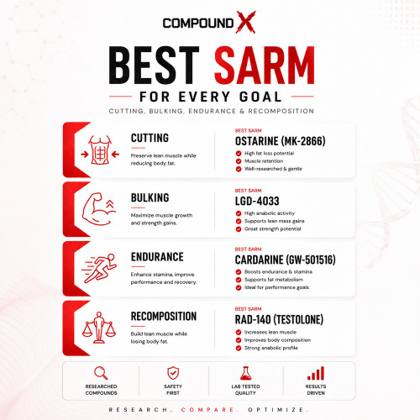
Bulking Research
🏆
LGD-4033 (Ligandrol)
+1.21kg lean mass at 1.0mg/day, 21 days (Basaria 2013)
The community's default "bulking SARM" pick is also the one with the strongest matching trial data — a real, placebo-controlled RCT that measured exactly this outcome in healthy young men.
Cutting Research
⚠️
S4 (Andarine)
No completed human trial
Andarine is the most commonly recommended SARM for cutting/vascularity research in online communities, but unlike LGD-4033 or RAD-140, it has no completed human clinical trial establishing safety or efficacy for any outcome. Its reputation is built on preclinical and anecdotal reports, not controlled data.
Endurance Research
🚩
Cardarine vs SR-9009 — Both Carry Real Red Flags
Cardarine: rodent carcinogenicity findings. SR-9009: ~2.2% oral bioavailability
These are the two most-discussed endurance research compounds, and neither has a clean story. Cardarine (GW-501516) was discontinued by GlaxoSmithKline in 2007 after rodent studies found tumor growth across multiple organs. SR-9009's foundational research used injection, not oral dosing, because oral bioavailability is reported around 2.2% — most commercially sold oral capsules may not replicate that research exposure at all.
Recomposition Research
🏆
Ostarine (Enobosarm)
Reached Phase 2/3 human trials
Ostarine's "mild, good for beginners" reputation lines up reasonably well with its actual trial history — real Phase 2 data showed lean mass and physical function improvements, even though its later Phase 3 trials in a sicker population didn't replicate that success. It's still the SARM with the most extensive regulated human testing on this site.
The Takeaway
Community reputation and trial evidence line up more often than expected — except for cutting
For bulking (LGD-4033) and recomposition (Ostarine), the community-favorite compound is also the one with the most directly relevant trial data. For cutting (S4) and endurance (Cardarine/SR-9009), the popular picks either have no human trial data at all or carry specific, documented red flags worth understanding before choosing them.
FAQ
Which SARM has the best evidence for bulking?
LGD-4033, based on the Basaria et al. 2013 placebo-controlled trial showing dose-dependent lean mass gains in healthy young men.
Is S4 (Andarine) proven for cutting?
No completed human trial exists for S4. Its cutting/vascularity reputation is based on preclinical and anecdotal reports, not controlled human data.
Is Cardarine or SR-9009 the safer endurance option?
Neither has a clean safety story. Cardarine has a documented carcinogenicity signal from rodent studies; SR-9009 has a poor oral bioavailability issue that may mean oral products don't deliver the exposure used in its foundational research.
References
Basaria S, et al. Journals of Gerontology: Series A. 2013;68(1):87-95. Dalton JT, et al. J Cachexia Sarcopenia Muscle. 2011; POWER trials. GW501516 development history, GlaxoSmithKline. Solt LA, et al. Nature. 2012.