Quick Overview
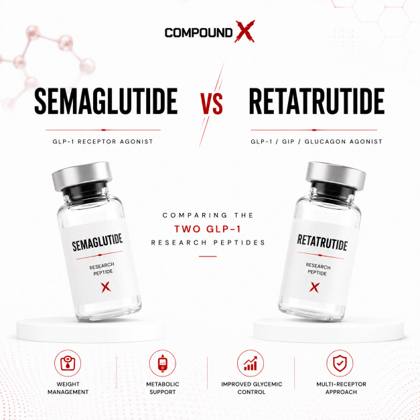
Semaglutide and Retatrutide are both incretin-receptor-based compounds studied for metabolic and weight research, but they're at very different regulatory stages — a distinction that matters more here than in almost any other comparison on this site.
Semaglutide
FDA-approved under three brand names: Ozempic and Rybelsus for type 2 diabetes, Wegovy for chronic weight management. Extensively documented in its own prescribing information.
Retatrutide
An investigational triple agonist developed by Eli Lilly, not yet FDA-approved, still in clinical trials.
Mechanism Compared
Semaglutide mimics the naturally occurring incretin hormone GLP-1, slowing gastric emptying, increasing insulin secretion in response to meals, and acting on appetite-regulating centers in the hypothalamus — mechanisms documented extensively across its clinical trial program and FDA-reviewed labeling. Retatrutide takes a broader approach, acting as a triple agonist at GLP-1, GIP and glucagon receptors simultaneously — a mechanism researchers have proposed may combine appetite suppression (via GLP-1/GIP) with increased energy expenditure (via the glucagon receptor), a combination not present in single-receptor GLP-1 drugs like semaglutide.
Regulatory Status — A Key Difference
This is the most important distinction in the comparison. Semaglutide is not an unregulated research chemical — it's an FDA-approved medication with a full safety and efficacy dossier, available by prescription under three brand names. Retatrutide, despite substantial trial interest, remains investigational and has not received FDA approval for any indication. Any Retatrutide sold outside a clinical trial is, by definition, not the same regulated, quality-controlled product as prescription semaglutide — a distinction worth being clear-eyed about.
Dosing Guide
An important distinction on dosing
Semaglutide has an FDA-reviewed dosing schedule as part of its approved prescribing information for its approved indications — that information exists, but it's medical guidance tied to a prescription, not something Compound X provides. Retatrutide's dosing exists only within its ongoing clinical trial protocols and has no FDA-approved human dosage.
Compound X does not provide dosing recommendations for either compound. Research-grade material sold outside a prescription or clinical trial is not the same regulated product and is not intended for human consumption.
Side Effects Compared
As an FDA-approved medication, semaglutide's side-effect profile is well documented in its prescribing information — most commonly gastrointestinal effects (nausea, vomiting, diarrhea, constipation), along with rarer but serious risks discussed in its labeling such as pancreatitis and gallbladder disease. Retatrutide's published clinical trial data has reported a similar gastrointestinal profile (nausea, diarrhea, vomiting) consistent with other incretin-receptor agonists, plus the trial-specific safety monitoring associated with any investigational drug still under study.
The Verdict
This comparison isn't really "which works better"
Semaglutide is an approved medication with a real prescribing pathway through a doctor. Retatrutide is a promising but still-investigational compound without that regulatory status yet. The mechanistic comparison (single vs triple receptor agonism) is genuinely interesting research, but the regulatory gap is the more practically important difference between the two right now.
FAQ
Is Semaglutide the same as Ozempic?
Yes — Semaglutide is the active compound; Ozempic, Wegovy and Rybelsus are FDA-approved brand-name formulations of it for different approved indications.
Is Retatrutide FDA-approved?
No. Retatrutide is investigational and remains in clinical trials; it has not received FDA approval for any indication.
What makes Retatrutide's mechanism different from Semaglutide's?
Semaglutide acts on a single receptor (GLP-1). Retatrutide is a triple agonist acting on GLP-1, GIP and glucagon receptors simultaneously — a broader mechanism researchers are studying for potentially different metabolic effects.
References
Semaglutide FDA prescribing information (Ozempic, Wegovy, Rybelsus). Retatrutide clinical trial program, Eli Lilly, as reported in published trial data on GLP-1/GIP/glucagon triple agonism.