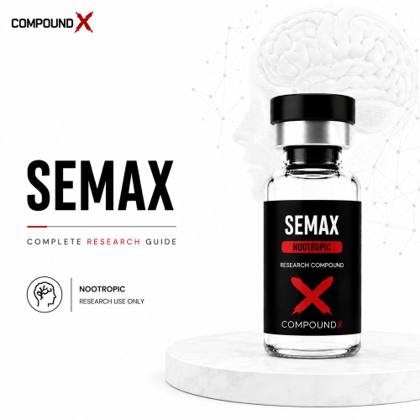
What Is Semax?
Semax is a synthetic peptide derived from a fragment of adrenocorticotropic hormone (ACTH 4-10), developed in Russia and studied since the 1980s as a nootropic and neuroprotective research candidate. It is approved as a prescription medication in Russia for certain neurological indications.
Mechanism of Action
Semax lacks the hormonal (corticotropic) activity of full ACTH but is studied for its effects on brain-derived neurotrophic factor (BDNF) expression and central nervous system signaling, mechanisms researchers have linked to its studied cognitive and neuroprotective effects.
Studied Benefits
These are effects Semax has been studied for in available preclinical and early research — not claims about guaranteed outcomes.
🧬
Cognitive Research
Semax has been studied in Russian clinical and preclinical research for effects on attention, memory, and learning, and is approved in Russia for use in certain conditions involving cognitive impairment.
⚡
Neuroprotective Research
A portion of the literature has examined Semax in animal models of ischemic brain injury, where researchers have investigated its potential neuroprotective and anti-inflammatory effects on brain tissue.
Dosing Guide
What the research shows
Clinical protocols studied in Russian trials used intranasal administration at doses defined in that regulatory context; no FDA-established human dosage exists in the United States.
Compound X does not provide dosing recommendations. Semax is sold for laboratory research use only and is not intended for human consumption.
Reported Side Effects
Semax holds regulatory approval in Russia but does not have FDA approval in the United States, and independent Western trial data is limited. Reported concerns in available research and anecdotal use are generally mild, including nasal irritation with intranasal administration; comprehensive long-term human safety data outside Russian clinical use remains limited.
FAQ
Is Semax FDA-approved?
No. Semax is not FDA-approved for any indication and is sold strictly as a research chemical, not a medication or dietary supplement.
What is Semax commonly studied for?
Cognitive Research — Semax has been studied in Russian clinical and preclinical research for effects on attention, memory, and learning, and is approved in Russia for use in certain conditions involving cognitive impairment.
Is Semax legal to buy in the US?
In the US, UK, Canada and Australia, Semax is generally sold labeled "for research use only, not for human consumption." It is not approved as a dietary supplement or medication in any of these countries.
References
Semax research is indexed on PubMed under search terms such as "Semax ACTH analog" and "Semax neuroprotective nootropic."